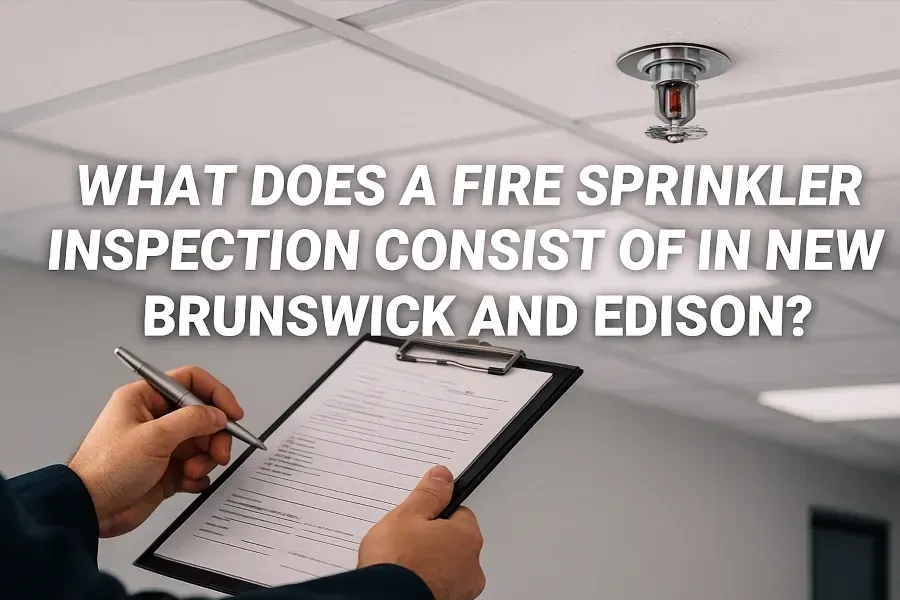
What Does a Fire Sprinkler Inspection Consist of in New Brunswick and Edison?
Regular fire sprinkler inspections are essential for safety, insurance compliance, and meeting NFPA 25 standards in New Brunswick and Edison, NJ. Whether you manage a commercial building, industrial property, or residential complex, understanding what an inspection includes helps you stay prepared and avoid costly issues.
In this guide, we break down every part of a standard fire sprinkler inspection and link directly to official fire safety resources so building owners can trust the information.
Why Fire Sprinkler Inspections Matter
Fire sprinkler systems are regulated under NFPA 25, the national standard for inspection, testing, and maintenance of water-based fire protection systems. Inspections ensure your system activates correctly during a fire and remains compliant with New Jersey safety laws.
Businesses in New Brunswick and Edison must also follow state guidelines from the New Jersey Division of Fire Safety.
What a Fire Sprinkler Inspection Consists Of
A certified technician performs a detailed, multi-point evaluation. Here’s what is included:
1. Visual Inspection of Sprinkler Heads
The inspector checks every sprinkler head for:
Corrosion
Paint overspray
Obstructions
Physical damage
Correct orientation
NFPA 25 clearly outlines visual inspection criteria under its sprinkler inspection requirements.
2. Control Valve Examination
All system control valves must be:
Open
Properly supervised
Locked or sealed
Easily accessible
This step ensures water can flow instantly during a fire.
3. Gauges and Pressure Check
Technicians confirm that water pressure and gauge readings meet NFPA 25 standards. Incorrect pressure can prevent sprinklers from activating when needed.
4. Testing of Alarm Devices
A full fire sprinkler inspection includes testing:
Waterflow alarms
Supervisory alarms
Tamper switches
These are verified according to guidelines from UL Fire Safety Standards.
5. System Piping and Fittings Review
Inspectors look for:
Leaks
Pipe corrosion
Obstructions
Mechanical damage
Corrosion in sprinkler pipes is a major issue identified in NFPA’s fire protection research.
6. Main Drain Test
This test measures how quickly water flows through the system and identifies hidden blockages within the supply piping.
7. Backflow Preventer Testing (If Required)
New Jersey requires annual testing of backflow devices through approved procedures outlined by the New Jersey American Water guidelines.
8. Inspection of Fire Department Connection (FDC)
The FDC must be clear, labeled, and accessible for fire crews. Caps, check valves, and piping are all inspected.
9. Full Report and Deficiency List
After inspecting every sprinkler component, the technician provides:
A full system report
A list of deficiencies
Required repairs
Recommendations for maintenance
This documentation keeps your building compliant with both NFPA 25 and New Jersey state regulations.
How Often Fire Sprinkler Inspections Are Required
Per NFPA 25, inspections occur:
Weekly / Monthly – valves, gauges
Quarterly – alarms, flow switches
Annually – full sprinkler inspection
Every 5 years – internal pipe inspection
Every 10 years – dry system and quick-response sprinkler testing
You can confirm these timelines in the official NFPA 25 schedule.
Why Local Inspections Matter in New Brunswick and Edison
Water conditions, municipal infrastructure, and building codes vary between towns. Local inspectors understand:
New Brunswick’s older commercial buildings
Edison’s mixed industrial and residential properties
Middlesex County permit requirements
Local fire marshal expectations
Hiring a team familiar with both cities ensures accurate compliance and fewer repair issues later.
Stay Safe and Compliant With Professional Inspections
A fire sprinkler system is one of the most important life-safety systems in any building. Regular inspections protect lives, reduce property damage, and ensure compliance with national and local regulations.
If you're in New Brunswick or Edison, regular inspections keep your building prepared and fully compliant with NFPA 25, New Jersey fire codes, and insurance requirements.


