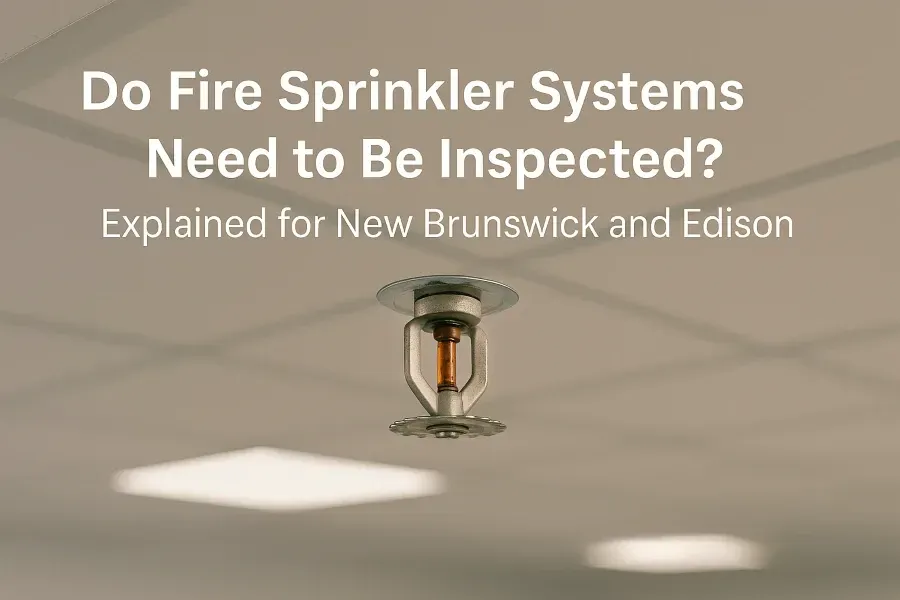
Do Fire Sprinkler Systems Need to Be Inspected? Explained for New Brunswick and Edison
Do Fire Sprinkler Systems Need to Be Inspected? Explained for New Brunswick and Edison
Fire sprinkler systems must be inspected regularly to stay compliant with NFPA 25, protect property, and ensure that all components activate correctly during a fire emergency. If you own or manage a property in New Brunswick or Edison, understanding inspection requirements is essential for safety and legal compliance.
Below is a complete guide based on national standards and New Jersey best practices.
Why Fire Sprinkler Systems Must Be Inspected
Fire sprinkler inspections are required under
NFPA 25: Standard for the Inspection, Testing, and Maintenance of Water-Based Fire Protection Systems.
This national standard outlines how often each component of the system must be inspected, tested, and maintained.
The State of New Jersey also adopts NFPA 25 through its
Uniform Fire Code, which means property owners are legally responsible for ensuring their systems are maintained.
Regular inspections help identify issues such as corrosion, blocked pipes, closed control valves, damaged sprinkler heads, or low water pressure.
How Often Fire Sprinkler Systems Need to Be Inspected
NFPA 25 organizes inspection requirements into four intervals:
1. Weekly
Basic visual checks of system valves and gauges.
Details appear in the NFPA’s guidance on valve supervision requirements.
2. Monthly
Verification that water pressure, control valves, and alarm components are in normal operating condition.
3. Quarterly
Testing of water flow switches, supervisory signal devices, and fire pump alarms.
4. Annual
A licensed contractor performs a full system evaluation, including sprinkler heads, pipes, hangers, water flow, and system hydraulics.
5. Every 5 Years
A more in-depth internal pipe assessment, required by
NFPA 25 Chapter 14.
This helps detect corrosion, microbial growth, and obstructions in underground or hard-to-access piping.
These intervals ensure the system stays operational and code compliant.
Who Is Responsible for Inspections?
According to the U.S. Occupational Safety and Health Administration and NFPA 25, the property owner (or the owner’s designated representative) is always responsible for making sure inspections, testing, and maintenance are performed on schedule.
This applies to:
Apartment buildings
Office buildings
Retail centers
Industrial facilities
HOA communities
Government properties
If the system fails during a fire and inspections were skipped, the owner can be held liable.
What Fire Sprinkler Inspections Include
A full inspection generally includes:
Checking sprinkler heads for corrosion, paint, dust, or physical damage
Verifying pressure gauge readings
Inspecting control valves
Confirming alarm and supervisory signals function correctly
Testing main drains and water flow
Examining visible piping
Assessing underground piping condition
Ensuring compliance with New Jersey’s fire safety requirements via the
NJ Division of Fire Safety
These steps help keep both occupants and property safe.
Why Inspections Matter for New Brunswick and Edison
Both New Brunswick and Edison enforce local fire safety regulations overseen by each municipality’s fire prevention bureau. Regular inspections ensure your system satisfies local ordinances, avoids violations, and maintains insurance compliance.
Businesses operating near Rutgers facilities, downtown New Brunswick, major Edison commercial zones, or residential developments especially benefit from consistent system testing due to higher occupancy and risk levels.
Professional Fire Sprinkler Inspection Services
DMD Mechanical installs, inspects, and maintains commercial and residential fire sprinkler systems throughout New Brunswick and Edison. We follow all inspection intervals required by NFPA 25, New Jersey fire code, and industry best practices.


